

AI Insights · Timothy · April 2024
Top 5 Carpooling and Ridesharing Apps on iOS in Colombia Q1 2024
An overview of the performance of the top 5 carpooling and ridesharing apps on iOS in Colombia during Q1 2024, based on download and active user metrics.
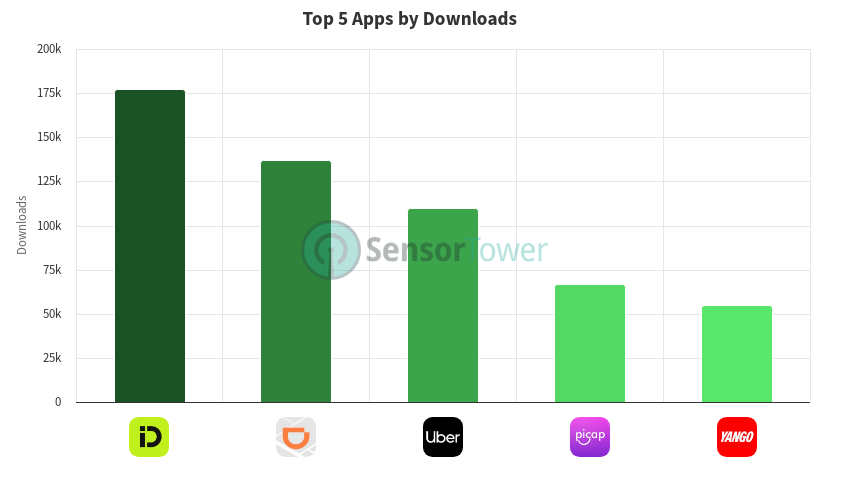
During the first quarter of 2024, the top 5 carpooling and ridesharing apps on iOS in Colombia showed varied performance in terms of weekly downloads and active users. Here's a detailed look at each app's trends.
inDrive. Save on city rides saw a consistent performance in weekly downloads, starting strong with 16.2K downloads in the first week of January and maintaining numbers around 12K to 16K throughout the quarter. Weekly active users for the app started at 351.4K and peaked at 437.7K in the week of March 18, before slightly decreasing to 385.1K by the end of the quarter.
DiDi Rider: Affordable rides experienced a steady increase in weekly downloads, beginning with 9.5K in the initial week and reaching a peak of 12.3K by the end of January. The app maintained downloads between 9.5K and 11.4K for the remainder of the quarter. Active users followed a similar growth pattern, rising from 234.3K to a peak of 304.7K in late January, and ending at 253.9K in the final week of March.
Uber - Request a ride had weekly downloads ranging from 7.3K to 9.6K, with a notable peak of 9.6K in the last week of January. Active user numbers started at 105.9K and showed a steady increase, peaking at 143.9K in mid-March, before slightly dropping to 124.8K by the end of the quarter.
Picap displayed relatively stable download numbers, starting with 4.3K and peaking at 5.9K at the end of January. The app saw a downward trend in downloads towards the end of the quarter, finishing with 4K. Active users for Picap started at 24.8K, peaked at 28.4K in late January, and then gradually declined to 25.4K by the end of March.
Yango: taxi, food, delivery showed significant growth in downloads, starting with just 442 in the first week of January and peaking at 8.4K by mid-March. Active users also increased substantially, from 2.3K in early January to 13.7K by the end of March.
The data for these apps comes from Sensor Tower, and more detailed insights can be found there.